Drive through almost any growing part of the UAE and you start noticing the same thing. Tower cranes. Fast-moving labor crews. Concrete everywhere. And behind many of those walls, often hidden from sight, there is another material quietly doing a large part of the work: EPS.
Not glamorous. Not particularly photogenic either.
But construction in the Gulf rarely rewards materials simply for looking impressive. The climate is too unforgiving for that. Buildings here absorb relentless heat for most of the year, and developers have spent the last decade trying to solve a basic but expensive problem — how to keep indoor temperatures manageable without turning every building into an electricity-hungry machine.
That is part of the reason Thermal Insulated Blocks are now so common across residential compounds, warehouses, schools, villas, and commercial developments in the UAE.
The shift did not happen overnight. And honestly, there was resistance at first.
Some contractors viewed EPS blocks as lightweight substitutes rather than serious construction materials. Others worried about durability. In some cases, people simply preferred familiar methods because construction culture tends to repeat itself until costs become impossible to ignore.
Costs eventually became impossible to ignore.
The UAE Climate Changes Construction Priorities
A wall in Northern Europe and a wall in Dubai are solving very different problems.
In colder countries, insulation mainly helps trap heat inside. In the UAE, the challenge is reversed. Buildings spend most of their life trying to keep heat out.
That sounds simple until you stand beside a concrete structure in July.
Traditional masonry absorbs heat throughout the day and slowly releases it inward. Air conditioning systems then work harder and longer to maintain indoor comfort. The result is predictable: high energy consumption, uneven cooling, and long-term operating costs that continue long after construction ends.
This is where Thermal Insulated Blocks started gaining attention. They combine structural functionality with insulation performance in a way that suits Gulf conditions unusually well.
At least on paper.
In practice, their success comes down to something less theoretical. They reduce thermal transfer enough to make cooling systems less strained. Over time, that matters more than marketing language ever will.
Especially for developers managing large properties.
EPS Became Practical Before It Became Popular
Construction trends in the UAE usually follow economics before aesthetics.
EPS blocks are lighter than many traditional materials. That affects transportation, handling, and installation speed. Workers can move faster with less structural load added to the building itself. On large projects, those small efficiencies accumulate quietly in the background.
A few saved days here. Lower cooling demand there.
Eventually, the numbers begin to persuade people who were skeptical at the beginning.
There is also the issue of labor. Contractors across the Gulf increasingly face pressure to finish projects quickly while maintaining energy compliance standards that are becoming stricter year after year. Thermal Insulated Blocks fit into that environment fairly well because they address multiple concerns simultaneously instead of solving only one problem.
That multifunctional aspect probably explains their spread more than anything else.
Energy Consumption Is Now Part of the Design Conversation
Ten or fifteen years ago, some developers treated insulation almost like an optional upgrade. Today it sits much closer to the center of planning discussions.
Electricity bills in heavily cooled regions are not abstract operational details. They influence tenant satisfaction, commercial viability, and long-term maintenance costs.
A poorly insulated building may still look attractive from the outside. But occupants notice internal heat fluctuations quickly. They notice AC systems running constantly. They notice certain rooms cooling unevenly during peak summer afternoons.
Good insulation tends to disappear into the background because nobody talks about it when it works properly.
That invisibility is part of the value.
Thermal Insulated Blocks help stabilize indoor temperatures by slowing external heat penetration. Not perfectly, of course. No single material solves everything. Window orientation, roof treatment, ventilation, and HVAC design still matter enormously.
But insulation changes the baseline performance of the structure itself. And once developers began measuring operational savings over time, EPS-based systems became harder to dismiss.
Lightweight Materials Changed Structural Thinking
There is another reason EPS products became attractive in modern UAE construction, though it receives less public attention.
Weight.
Reducing dead load can influence structural efficiency, especially in larger developments. Lighter wall systems may reduce stress on foundations and supporting elements. In certain projects, that can create additional design flexibility.
Again, this sounds very technical when explained in brochures. On actual construction sites, it becomes more practical.
Less weight often means easier handling.
Faster movement.
Reduced labor fatigue.
Those details rarely appear in advertisements, but site engineers tend to remember them.
The UAE construction industry has always leaned toward methods that improve speed without completely sacrificing durability. EPS blocks arrived at a moment when both speed and energy efficiency became commercially important at the same time.
That timing helped.
Manufacturers Expanded the Market Quietly
The rise of Polystyrene Manufacturers and Suppliers across the region also changed availability. Materials that were once treated as specialized gradually became more accessible to mainstream contractors.
That matters more than people assume.
A material cannot become standard if procurement remains difficult or inconsistent. Once supply chains improved, developers became more willing to specify EPS-related systems in larger volumes.
The same happened with Expanded Polystyrene Sheets, which are now used across insulation applications ranging from walls to roofing systems and cold storage facilities.
Not every project uses the same approach, obviously. Construction in Abu Dhabi differs from construction in Sharjah. Industrial facilities differ from villas. There are still debates around cost balance, fire performance standards, and long-term maintenance considerations depending on the application.
Those discussions are healthy, honestly.
Construction materials should probably be questioned before they become widespread.
The Conversation Around Sustainability Feels More Serious Now
A decade ago, sustainability language in construction often sounded promotional. Sometimes vague.
Now the conversation feels more grounded because energy efficiency is directly connected to operating expenses and regulatory expectations.
Developers increasingly understand that inefficient buildings age poorly in hot climates. Tenants become dissatisfied faster. Cooling systems wear down earlier. Maintenance costs rise gradually until they become difficult to ignore.
EPS-based insulation systems are not a magical solution. Some marketing campaigns exaggerate their capabilities a little. Still, their thermal performance appears to align well with the environmental pressures buildings face in the Gulf region.
And that practical alignment is usually what determines which materials survive long term.
Not trends. Not slogans.
Just repeated usefulness over time.
What Is a Thermal Insulated Block and How Is It Used in Construction?
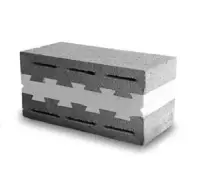
A thermal insulated block is a building block designed to slow down the movement of heat through walls. In many modern construction projects, especially in hot regions, these blocks are made using concrete combined with insulation materials such as EPS.
At first glance, they may look similar to ordinary masonry blocks. The difference becomes noticeable later, once the building starts dealing with real weather conditions.
Traditional walls absorb outside heat fairly quickly. Thermal Insulated Blocks are built to reduce that transfer. The wall itself becomes part of the building’s temperature-control system instead of simply acting as a structural divider.
In construction, these blocks are commonly used for exterior walls, partition walls, warehouses, villas, schools, and commercial buildings. Contractors in the UAE and parts of India increasingly use them because cooling costs have become difficult to ignore.
There is also a practical reason builders like them.
They are often lighter than standard cement blocks, which can simplify transportation and speed up installation on site. That may sound like a small operational detail. On large projects, it rarely stays small.
How Does a Thermal Insulated Block Help Reduce Heat in Buildings?
Heat enters buildings in layers.
Roof surfaces absorb sunlight. Windows transfer warmth inward. Walls slowly collect external heat during the day and release it into indoor spaces later, sometimes well into the evening.
This is where Thermal Insulated Blocks become useful. They reduce the speed at which heat passes through the wall structure. Instead of allowing external temperatures to move inward quickly, the insulation creates resistance.
The effect is not dramatic in a cinematic sense. You do not walk into a building and suddenly feel “cold walls.” Real insulation works more quietly than that.
Rooms tend to stay more stable.
Air conditioning systems cycle less aggressively.
Indoor cooling becomes easier to maintain over longer periods.
In climates where temperatures remain high for months, even moderate reductions in heat transfer can affect electricity consumption noticeably over time.
That long-term efficiency is often more valuable than the initial construction savings people focus on during planning.
Why Are Thermal Insulated Blocks Important in Hot Climates Like UAE and India?
Hot climates change the priorities of construction.
In cooler countries, walls mainly help retain indoor warmth. Buildings spend most of their existence trying to resist outside heat instead.
The challenge is constant.
Concrete structures exposed to harsh sunlight absorb thermal energy throughout the day. Without proper insulation, indoor spaces become harder to cool evenly. Certain rooms heat faster than others. Air conditioners run longer. Occupants notice discomfort before they notice the technical reason behind it.
That distinction matters more than many developers initially assume.
Thermal Insulated Blocks help reduce the pressure placed on cooling systems by improving the building envelope itself. Rather than depending entirely on mechanical cooling, the structure contributes to temperature control.
The UAE adopted insulated construction methods earlier because energy efficiency standards tightened quickly alongside rapid urban growth. India appears to be moving in a similar direction, although adoption still varies by region and budget.
Not every builder prioritizes insulation yet. Some still focus almost entirely on upfront construction costs. But operating expenses have a way of changing opinions over time.
What Are the Benefits of Using Thermal Insulated Blocks in Construction Projects?
The obvious benefit is thermal performance. Buildings remain cooler and require less energy for air conditioning.
But the material gained popularity for several smaller reasons too.
Weight reduction is one of them.
Compared to traditional masonry systems, insulated blocks are often lighter, which may reduce structural load and make handling easier for workers during construction. Faster installation can influence project timelines more than people expect.
Noise reduction is another advantage that occasionally gets overlooked. Certain insulated wall systems help reduce external sound transmission, particularly in dense urban developments.
There is also the issue of consistency.
Buildings constructed with better insulation tend to provide more stable indoor comfort during peak summer conditions. Occupants may not always recognize why one building feels easier to live in than another. They simply notice that some spaces remain comfortable without forcing cooling systems to work constantly.
Of course, no material solves everything. Poor window placement or inefficient HVAC design can still undermine overall performance. Construction rarely depends on one perfect solution.
Still, Thermal Insulated Blocks have become increasingly common because they address multiple concerns at once instead of solving only a single problem.
How Is a Thermal Insulated Block Different From a Regular Cement Block?
A regular cement block mainly provides structural support and wall separation. Its insulating ability is relatively limited.
A thermal insulated block attempts to combine structure and insulation within the same system.
The difference becomes more noticeable in hot weather conditions. Standard cement walls absorb and transfer heat more quickly, which can increase indoor temperatures during the day. Insulated blocks slow that transfer process.
There is also a physical difference in composition.
Many insulated systems use EPS or similar materials within the block structure itself, while regular cement blocks rely mostly on dense concrete mixtures alone. Some manufacturers also produce related Polystyrene products and Expanded Polystyrene Sheets for additional insulation applications across walls and roofing systems.
Another distinction involves energy usage over time.
A building constructed entirely with conventional cement blocks may depend more heavily on mechanical cooling to maintain comfort. Thermal Insulated Blocks attempt to reduce that dependence by improving passive thermal resistance from the beginning.
That does not mean regular blocks disappear entirely. They are still widely used across many projects.
But in regions where heat dominates daily life for most of the year, insulation gradually stops feeling optional. It starts feeling practical.
FAQ
What is a thermal insulated block?
A thermal insulated block is a construction block designed to reduce heat transfer through walls. It usually combines structural materials with insulating components such as EPS to help maintain more stable indoor temperatures.
What are the benefits of thermal insulated blocks?
They may reduce heat penetration, improve indoor comfort, lower cooling demand, and help buildings meet energy efficiency standards. Many contractors also prefer them because they are relatively lightweight and easier to handle during construction.
Are thermal insulated blocks better than normal blocks?
That depends on the project. In hot climates like the UAE, Thermal Insulated Blocks often perform better in terms of temperature control and energy efficiency. Traditional blocks may still be used in certain structural or budget-focused applications.
Do thermal insulated blocks help save electricity?
In many cases, yes. Better insulation can reduce the workload on air conditioning systems, which may lower electricity consumption over time.
Are thermal insulated blocks strong enough for construction?
When manufactured and installed properly, they are widely used in residential, commercial, and industrial projects. Their suitability depends on engineering requirements, local regulations, and the type of structure being built.