A building in the UAE can be structurally sound and fitted with an efficient air-conditioning system, yet still perform badly because the envelope allows too much heat through the roof and external walls. That is where insulation stops being a product purchase and becomes a design decision.
Dubai Municipality’s published Green Building Regulations set maximum thermal transmittance values of 0.30 W/m²K for roofs and 0.57 W/m²K for external walls in the cited requirements. The regulations also call for thermal bridges at junctions such as beams, columns, doors and windows to be eliminated or insulated to reduce heat flow. The useful point here is that insulation is judged as part of an assembly, not as a board sitting on a pallet.
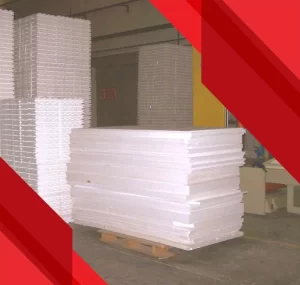
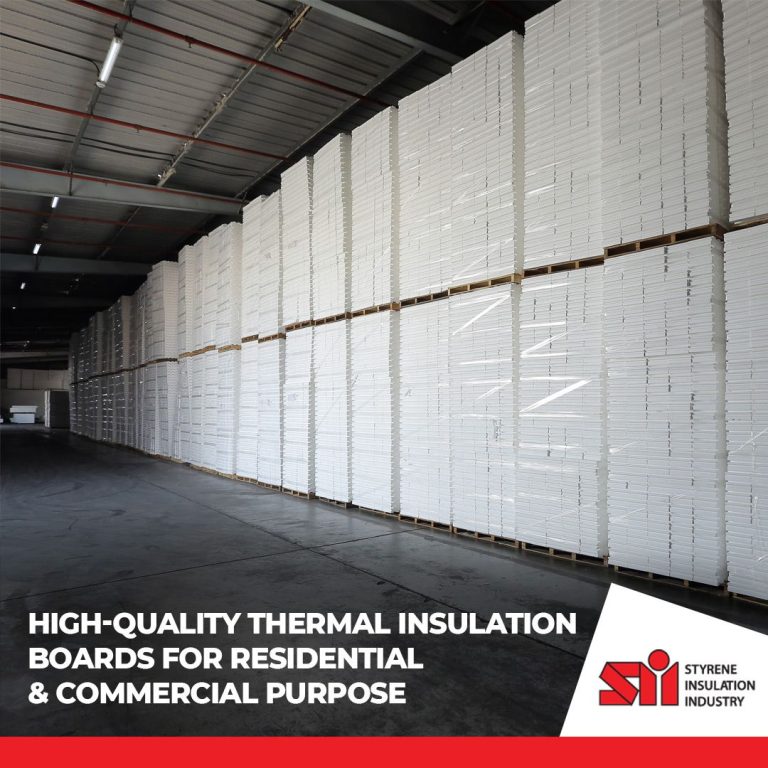
Polystyrene Insulation Boards suit this type of construction because they provide useful thermal resistance without adding much weight. EPS is formed from fused expanded beads containing trapped air. For walls, roofs, floors and sandwich constructions, that combination is attractive because it is simple, predictable and relatively easy to accommodate within the building build-up.
I would still resist describing EPS merely as “good insulation” without stating the grade, thickness and density. A 25 mm low-density board and a 100 mm higher-density board are not interchangeable. Nor is a board intended for a protected cavity automatically suitable beneath a loaded screed or in an exposed façade system. Density, compressive strength, dimensional tolerance, thermal conductivity and fire classification all have a bearing on where an EPS board belongs. That distinction is where good specifications start.
Thermal Performance Depends on Continuity, Not Just Thickness
The headline benefit of Polystyrene Insulation Boards is reduced heat transfer through the building fabric. In a hot climate, that can reduce heat entering conditioned space and help the cooling system deal with a smaller envelope load. Dubai Municipality’s current building-code resources include U-value calculation tools and insulation details, reflecting how closely envelope performance is tied to compliance and mechanical design.
EPS can add thermal resistance without creating a heavy or complicated layer. Boards can be cut around service penetrations, parapets, upstands and structural interruptions, and can be supplied in project-specific dimensions. Styrene Insulation Industry describes its Insolite boards as available in specific densities and custom shapes, with physical and technical properties tested to ASTM C578 requirements.
But cutting is also where performance is often lost. A crew can install the specified thickness across most of a roof and still leave enough open joints, badly trimmed corners and uninsulated upstands to create weak points. The board has not failed. The installation has. Dubai’s regulations specifically address thermal bridging because localised interruptions in the envelope allow heat to bypass otherwise insulated areas.
Tight joints matter. So do edges. Boards should not be forced into distorted gaps and assumed to close up later. Around pipes and conduits, loose offcuts are rarely equivalent to properly cut insulation. At wall-column junctions, continuity deserves more attention than speed of fixing.
The same applies when Expanded Polystyrene Sheets are used over repetitive wall or roof areas. Repetition helps only if workmanship remains consistent. Styrene’s own construction guidance makes the same distinction between the material and its specification: density, thickness, application and the complete assembly have to be considered together.
Insulation also has limits. It will not compensate for uncontrolled air leakage, poor glazing selection, large unshaded solar exposures or a badly designed air-conditioning system. Dubai’s green-building framework treats building fabric, glazing, HVAC efficiency and air leakage as connected parts of overall energy performance rather than isolated specifications.
Cost-effectiveness is an installed-cost Question
EPS is often chosen because its material cost is competitive. Fair enough, but the better comparison includes transport, labour, handling, cutting waste, installation speed, structural dead load and the thickness required to achieve the design target.
Lightweight boards can be moved manually with less effort than dense alternatives, and large areas can be installed quickly when the substrate and detailing are straightforward. Styrene’s UAE product material emphasises low weight and ease of installation for its EPS boards used in construction.
For villas, warehouses, schools, retail projects and accommodation buildings, that matters. A material that arrives in manageable sizes, can be cut without heavy specialist equipment and adds little dead load can remove friction from the programme. EPS is currently used across several such building applications in the UAE.
The mistake is buying on rate alone. When quotations are requested from Polystyrene Manufacturers and Suppliers, the enquiry should state density or compressive classification, thickness, dimensional tolerance, thermal performance, intended application and relevant certification. “EPS board, 50 mm” leaves too much room for products that look similar but perform differently. Styrene’s current technical material likewise notes that density, compressive strength, dimensional tolerance, thermal conductivity and fire classification should not be overlooked when comparing boards.
Under a roof screed, compressive behaviour matters. Behind a wall lining, dimensional fit may matter more. In a cavity, fixing and continuity are critical. Decorative or packaging Polystyrene products have different performance criteria again. Price comparisons only become meaningful after the technical requirement has been held constant. Styrene itself manufactures EPS for several distinct purposes, including insulation, packaging, geofoam and other applications, rather than treating all EPS as a single specification.
There is also the cost of rework. Replacing damaged insulation after waterproofing, screed, blockwork or cladding has progressed can cost far more than the board itself. Do not leave stacks where other trades will walk over them, drop equipment on them or expose cut edges to incompatible chemicals. Lightweight does not mean indestructible.
Low weight helps on site; specification controls durability
EPS is light, easy to cut and practical where large areas must be insulated without imposing much additional structural weight. Styrene’s Abu Dhabi operation produces EPS materials for insulation and other uses, with a range that includes blocks, sheets, boards and geofoam.
That versatility creates a common bad assumption: if it is all expanded polystyrene, any EPS will do. It will not.
Density and compressive strength must suit the application. Roof insulation carrying screed, maintenance traffic or an overlying build-up should be selected for the imposed loads. Floor insulation has its own requirements. Vertical wall insulation may be governed more by fixing, fire strategy, façade design and dimensional stability. Styrene’s current construction guidance specifically warns against comparing EPS solely by price without considering density, strength and intended use.
Water exposure needs judgement as well. EPS is not a substitute for waterproofing. On roofs, it belongs inside a properly designed build-up where membranes, falls, protection layers and drainage are treated as separate matters. The insulation may be thermally suitable and the roof can still fail because the waterproofing or detailing around penetrations is poor.
Fire performance needs the same discipline. EPS should not be specified by thermal value alone where the wall or roof assembly is subject to fire requirements. Board grade, protective layers, cavity barriers, façade configuration and authority approvals have to be considered together. Dubai’s published regulations state that where their requirements differ from Dubai Civil Defence requirements, Civil Defence requirements prevail. “We used the same board on the last project” is not a specification.
Where EPS Earns its Place in UAE Construction
Roofs are an obvious application because solar exposure drives heat towards the upper part of a building. A continuous EPS layer within a properly detailed roof system can improve thermal resistance while keeping the insulation layer light. Dubai’s published envelope criteria place a maximum U-value requirement on roofs, underlining why roof insulation is part of the thermal design rather than an optional extra.
Cavity walls are another sensible use. The material can provide a continuous insulating layer between inner and outer construction, provided cavity detailing, ties, joints and fire provisions are resolved. EPS is also used in sandwich panels, insulated concrete systems and selected floor build-ups. Styrene’s current construction material describes uses across walls, roofs, floors and other building applications in the UAE.
The UAE climate strengthens the thermal argument, but climate alone does not make a product suitable. Roof traffic, façade height, fire strategy, exposure, substrate condition and authority requirements can all change the answer.
Some projects need another insulation type. A façade system may demand a different fire classification. A roof may require higher compressive performance or another moisture strategy. A tight build-up may favour a material achieving the target thermal resistance at a smaller thickness. Cold stores and specialist industrial buildings bring their own detailing problems.
The real strength of Polystyrene Insulation Boards is not that they solve every insulation problem. Correctly specified, they solve a large number of ordinary construction problems without making the assembly unnecessarily heavy, slow or expensive.
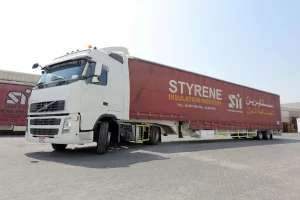
Styrene Insulation Industry states that it has manufactured EPS under the Insolite brand in Abu Dhabi since 1995 and can tailor products to customer requirements. Its current product information also states that the physical and technical properties of Insolite boards are tested to ASTM C578 requirements.
FAQs
1. Why are these insulation boards widely used in modern construction?
Their combination of thermal resistance, low weight, easy cutting and practical installation suits a wide range of wall, roof and floor assemblies. The exact grade still has to match the application.
2. What are the key benefits of EPS insulation boards?
They can reduce heat transfer through the building envelope, add little dead load, simplify handling and offer a competitive installed cost. Correct thickness, density and detailing still matter.
3. Why is EPS board insulation considered cost-effective?
The board price is only part of the calculation. Low weight, straightforward cutting and relatively simple installation can reduce handling and programme demands. A cheaper board becomes expensive if the wrong density or grade leads to rework.
4. How does EPS board insulation reduce heat transfer in buildings?
Its cellular structure contains trapped air, which slows heat transfer through the material. The required thickness should come from the thermal design rather than being selected by habit.
5. What makes EPS insulation boards suitable for UAE construction projects?
They work well where reducing heat gain, controlling building-envelope weight and installing large insulation areas efficiently are priorities. The complete system must still satisfy applicable building and fire-safety requirements.
6. What is a polystyrene insulation board?
It is a rigid insulation panel produced from expanded polystyrene beads moulded and fused into a lightweight cellular board. Different densities, thicknesses and strengths are produced for different applications.
7. Why are EPS boards popular in construction?
They are straightforward to transport, cut and install, and can be used in several common building-envelope applications. Their value comes from predictable performance when the correct grade is specified.
8. How do EPS boards improve thermal insulation?
They add thermal resistance to the wall, roof or floor and reduce the rate at which heat passes through that element. Gaps and thermal bridges reduce the benefit, which is why continuity of insulation matters.
9. Are EPS insulation boards suitable for hot climates?
Yes. EPS is widely supplied in the UAE for insulation applications. Suitability should still be checked against the complete wall, roof or floor assembly rather than climate alone.
10. Can EPS boards be used for roof insulation?
Yes. They can be used in roof systems when the selected board has the required thermal and compressive properties and is integrated correctly with waterproofing, falls, protection layers and fire requirements.