
Most of expanded polystyrene is just air, about ninety-eight percent air by volume trapped in fused beads. You get almost a tonne into one cubic metre before the water wins. Lift one hand to close to a block, the figure feels like a misprint.
The ratio is pretty much everything, and it is why you’ll occasionally see Polystyrene Pontoons under jetties, swim platforms, floating restaurants & event decks along the Gulf coast. A significant portion of the buoyancy of steel pontoons is expended on the pontoon itself. Concrete spends more. Foam is virtually weightless, so most of the water that gets displaced goes into supporting whatever sits on top of it: deck furniture, guests themselves, a bar surface, a generator.
And load simply is a design number — the two hundred working at Beach Club platform will visibly size differently than a fishing deck for four. The foam is characterless in scaling to either. You add modules.
There is also a lesser-known advantage too. If the outer shell is scraped open, the pontoon does not flood as there is no empty chamber for foam to fill. The platform also appears to sit slightly lower, though, and continues.
Designed to withstand heat, salt and a long summer
In August the water off the Emirates is warm enough for a bath, and air above it remains in the forties (C) for weeks. That is where materials are tested in a way that no data sheet can ever truly portray.
Improved closed-cell polystyrene is rot-resistant, rust-resistant, and in an argument with salt. They will not corrode at the weld, they won’t swell and split At water line there is no galvanising to wear through. The foam is enveloped in a shell material that protects it from sunlight and wear, and the core silently performs its floating function.
Humidity gets the same treatment. Moisture has a slim pickings with a solid outer skin, meaning year on year that a platform in a Ras Al Khaimah creek behaves like one off the Corniche.
What’s in the pontoon
A bare foam block is not a float. The wrap that lasts is the block-wrapped: polyurea coating, rotationally moulded polyethylene shell or for heavy-duty commercial work a concrete skin. Each wrapper provides the foam with an unusual personality. Polyethylene brushes off as being battered by tenders and jet skis. Mass up till October 2023Masters of concrete for stability. A covering maintains the profile slim and also spending plan friendly.
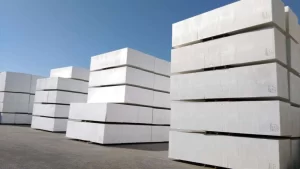
While also density matters as much as the wrapper. Dense Expanded Polystyrene Sheets, cut and fused into modules, provide a rigid core that resists point loads, stay firm under load within the deck. In soggy wooded spots, though, a lighter grade works well for walkways and decorative platforms. Picking one of them requires a couple of chats with someone who is familiar from the materials, but saves you tons of rework later.
It also keeps stray foam beads from floating into waterways, which makes both managers and marine authorities happy.
Shape follows the site
Every waterfront is slightly awkward. A curved quay wall, a creek that varies in depth, channel shifts with the tide; a hotel wishing to form its platform as its logo. Foam is easy to cut, so instead of designing foam parts to fit a catalogue size pontoon it is often made out of polystyrene that simply follows the design.
From the same stuff to very different shape: fish-farm walkways, floating gardens, pop-up stages, solar arrays on still water and boardwalk through mangrove. Modules connect with marine-grade connectors so a platform can be enlarged next year, or adapted to another season. In a land where the events calendar changes every quarter, a deck that rearranges without rebuilding fast earns its place.
Installation and then a few years of unspectacular service
The light modules are moved by hand or small crane. They launch from a ramp. Crews remain small, and days remain short. Like any floating structure, mooring uses piles or chains and the platform rides the water level instead of against it which suits both tidal sites and lakes with varying levels alike.
Maintenance is mostly looking. To wash the surface, inspect the connectors, squint at the coating after full on season There are no repaintings every few rounds of years, with sacrificial anodes and running pumps within the compartments. It doesn’t take long for owners of Polystyrene Pontoons to realise how little the platform requires of them, and at a resort that’s critical because staff time should go towards guests rather than a jetty.
Lifecycle cost follows from that. The buy is cheap, the handling is cheap, and the upkeep is nearly zero.
Finding the right partner
The foam is only as good as the factory behind it. Bead quality, moulding temperature, cure time and density control decide whether a module performs on day one thousand as it did on day one. Polystyrene Manufacturers and Suppliers who run their own moulding lines can match grades to loads, share test data and cut to drawings without a long wait.
Ask what density is being quoted. Ask what coating goes on, and how modules are joined. Straight answers are a good sign.
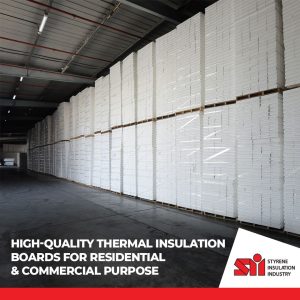
A supplier with a wide range of Polystyrene products, from insulation blocks to custom-cut shapes, usually understands the material from several angles, and that shows in the advice on a floating project. Styrene UAE supplies the regional market from that kind of range, which keeps logistics short and technical support in the same time zone as the site. Request a sample module and a written specification before the order. Both tell you more than a brochure.
FAQs
1. What are polystyrene pontoons and how do they work?
They are lightweight foam-filled floating modules that provide buoyancy by displacing water.
2. Why are polystyrene pontoons used for floating platforms?
They offer strong buoyancy, easy installation and flexible designs for floating structures.
3. What are their main benefits?
Lightweight construction, corrosion resistance, flexible layouts and low maintenance.
4. How do they compare with traditional floating systems?
They are lighter than concrete and avoid the corrosion problems associated with steel.
5. Are they suitable for the UAE climate?
Yes. Properly protected units can withstand UAE heat, humidity and saltwater conditions.
6. How durable are polystyrene pontoons?
Quality protective shells and suitable foam grades provide long-lasting marine performance.
7. Can they support heavy floating platforms?
Yes, when properly engineered with sufficient buoyancy and structural support.
8. How do you choose the right pontoons?
Consider load capacity, foam density, protective coating and water conditions.
9. How do they perform in hot and humid environments?
Their moisture-resistant core and protective covering help maintain performance.
10. Are polystyrene pontoons easy to install and maintain?
Yes. Lightweight modules simplify installation and generally require routine inspections.