Fresh produce does not usually lose quality because of one dramatic event. It is the accumulation of smaller exposures: time on a loading platform, movement between refrigerated and ambient areas, vibration inside the vehicle, repeated handling, stacking pressure and the temperature difference between the product and its surroundings.
That matters considerably in the UAE. A box may leave a temperature-controlled packing facility, spend a short period in a loading area, travel in a delivery vehicle and finally be unloaded at a wholesale market, supermarket, hotel or food-service facility. Every stage places a slightly different demand on the packaging.
Polystyrene Vegetables and Dates Boxes work well in this environment because expanded polystyrene combines thermal resistance with low weight and useful cushioning characteristics. EPS transport packaging is widely used where both temperature control and shock absorption are required.
The point is not that a box somehow creates freshness. It protects the conditions already established by correct harvesting, grading, pre-cooling and handling. That distinction matters.
When vegetables enter the box at the right condition and temperature, the EPS container reduces the speed at which external heat reaches them. During short transfers between controlled environments, that thermal buffer can be particularly valuable.
For distributors, the practical advantage is consistency. Packaging should continue doing its job while somebody is moving it, stacking it or transferring it from one vehicle to another. EPS is unusually effective here because the insulation and cushioning are part of the container itself rather than separate components added during packing.
Freshness Is Largely About Managing Temperature Change
Produce continues to behave biologically after harvest. Temperature influences respiration, moisture movement, texture and the rate at which quality changes. Good post-harvest handling is built around keeping conditions as stable as the product requires.
In UAE logistics, I would pay almost as much attention to temperature fluctuation as to the nominal temperature inside the vehicle.
Consider a shipment that spends most of its journey inside a refrigerated truck but is exposed briefly during loading and unloading. The surrounding air may be substantially warmer than the produce. Direct exposure allows heat to move towards the product rapidly. An insulated EPS wall slows that heat transfer.
That is the working value of Polystyrene Vegetables and Dates Boxes.
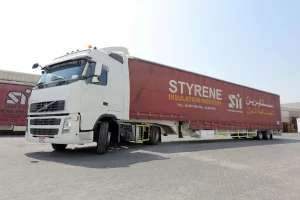
Styrene Insulation Industry identifies thermal efficiency, moisture resistance, strength, shock absorption and light weight among the characteristics of its EPS packaging range. The company manufactures its products in Abu Dhabi for applications that include food, logistics and cold-chain storage.
A good insulated box should still be treated as part of a temperature-management system. Produce packed at an appropriate temperature gives the packaging a much better starting point. Vehicles, loading procedures and storage conditions then work with the box rather than asking the box to perform the entire job.
There is a practical benefit here that sometimes receives less attention: low weight.
Transport packaging must protect the product without creating unnecessary handling weight. EPS consists predominantly of air by volume, which is why substantial wall thickness can be achieved without making the package excessively heavy.
For operations moving hundreds or thousands of boxes, that becomes a logistical advantage rather than a minor material property.
Dates Need a Different Kind of Protection
Dates are sometimes discussed as though they were straightforward to transport because they are less delicate than leafy vegetables. The reality is more interesting.
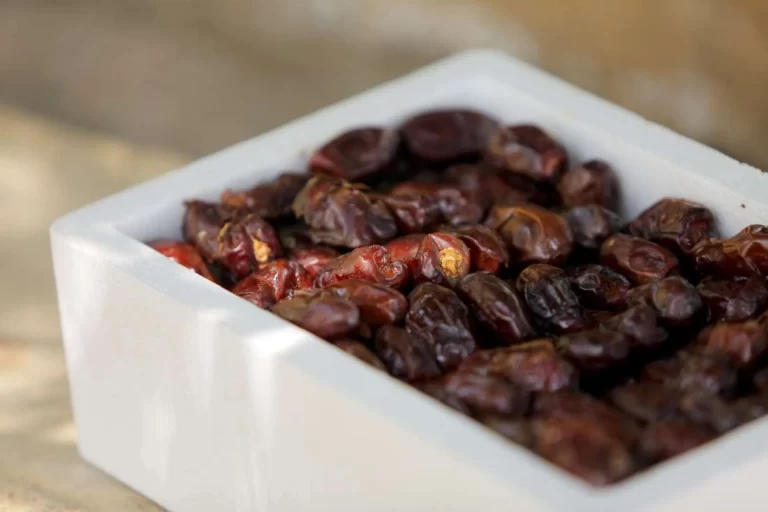
A date may tolerate handling well, yet appearance, surface condition, texture and presentation still matter commercially. Premium dates destined for retail counters, hospitality buyers or gifting channels need to arrive looking like premium produce.
Heat protection is useful, but physical protection deserves equal attention.
A well-designed EPS box distributes external forces through the package structure while its cushioning characteristics help reduce the effect of shocks and vibration. That is particularly useful during repeated loading, pallet movement and delivery.
The same characteristic explains why expanded polystyrene has been used extensively for transport packaging beyond food. Its job is not simply to surround a product. It creates a controlled protective space around it.
For date suppliers, Polystyrene Vegetables and Dates Boxes can provide that combination without introducing a heavy transport container.
Pack configuration still deserves thought. Box dimensions should suit the quantity and presentation of dates being carried. Internal space, stacking arrangement and the way individual retail packs sit inside the outer container all affect how efficiently the load behaves during transport.
Correctly matched packaging feels almost uneventful in use.
Boxes stack predictably. Workers can handle them comfortably. Product remains properly contained. Vehicle space is used efficiently. The package arrives looking much as it did when dispatched.
That uneventful performance is exactly what commercial food distribution needs.
Vegetables Need Cushioning as Much as Insulation
With vegetables, the visible sign of poor transport is often mechanical rather than thermal: bruising, compression or surface damage. Produce can leave a farm or packing facility in excellent condition and still lose presentation quality when movement inside the package is not properly controlled.
EPS brings a useful combination of rigidity and energy absorption. Industry guidance describes shock absorption as a core performance characteristic of expanded polystyrene transport packaging.
That matters for tomatoes, cucumbers, capsicum, courgettes and other produce whose commercial value depends heavily on surface appearance and texture.
Leafy vegetables present a different requirement. Here the emphasis is usually on protecting the conditioned environment around the produce while allowing the chosen packing and cooling system to operate correctly.
There is no reason to make packaging more complicated than the distribution chain requires.
A short local delivery and a longer inter-emirate movement are different jobs. So are wholesale vegetables packed in bulk and carefully graded produce intended for premium retail. The box dimensions, wall section and packing arrangement should reflect the actual journey.
That is where experienced Polystyrene Manufacturers and Suppliers add value. The useful conversation is not simply, “What box size do you have?” It is about the product, packed weight, transport distance, stacking arrangement, temperature requirement and handling method.
The wider family of Polystyrene products follows the same principle. Material performance becomes useful when the density, dimensions and form suit the application.
Packaging Performance Comes From the Whole EPS System
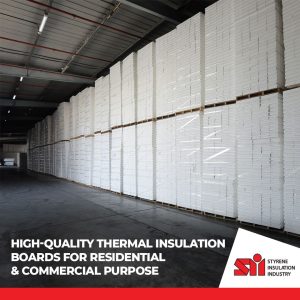
Expanded polystyrene is used in considerably more than produce boxes. The same basic material characteristics are applied differently across insulation, cold storage, construction and protective packaging.
That is worth understanding when specifying a box.
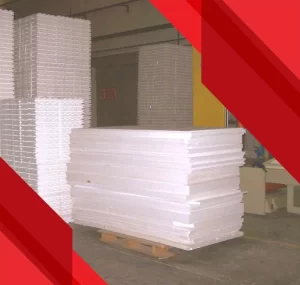
EPS Sheets, for example, may be selected where a fabricated insulation component is required. Expanded Polystyrene Sheets can be produced for applications where thickness, density and thermal characteristics are chosen around a particular duty. A moulded vegetable or date box applies EPS differently: its walls, corners, base and overall geometry are created as a functioning transport package.
Styrene Insulation Industry’s UAE range includes vegetable and date boxes, ice boxes, insulation products and custom packaging solutions, with EPS manufacturing carried out from its Abu Dhabi facility.
For fresh-food operators, several small practices make good packaging perform even better.
Pack produce at the temperature appropriate to the distribution programme. Select a box capacity that keeps the load secure without unnecessary movement. Stack according to the intended box geometry. Keep prepared shipments protected during dispatch. Coordinate loading so that temperature-controlled products move efficiently from storage to vehicle.
None of these practices is elaborate.
They simply allow Polystyrene Vegetables and Dates Boxes to perform the work they are designed to do: moderate external temperature influence, provide physical protection and make fresh-food transport easier to handle.
In a UAE distribution chain, where the distance between a cold room and a refrigerated vehicle may involve exposure to intense ambient heat, that combination is highly practical.
FAQs
1. How do Polystyrene Vegetables and Dates Boxes help maintain freshness?
Their EPS structure provides thermal insulation that slows heat transfer between the surrounding environment and the packed produce. The material also provides cushioning during transport. Used alongside appropriate product cooling, storage and vehicle conditions, the boxes help maintain a more stable environment around vegetables and dates.
2. What are the benefits of EPS vegetable and date boxes for food transportation?
They combine low weight, thermal resistance, cushioning and structural protection in a single package. Their light weight assists routine handling, while their insulating and shock-absorbing characteristics are useful during loading, vehicle movement, unloading and onward distribution.
3. Why are EPS boxes suitable for transporting vegetables and dates?
Vegetables and dates both benefit from protection against external heat and physical handling. EPS provides insulation while also helping cushion produce from movement and impact. Moulded boxes can also be produced in practical shapes for stacking, handling and transport.
4. How do these boxes help control temperature during transportation?
EPS has low thermal conductivity, so heat passes through the material relatively slowly compared with an uninsulated container. The box acts as a thermal barrier around the produce, supporting the temperature conditions established before and during transport.
5. What makes EPS boxes suitable for perishable food products?
Their useful combination of insulation, light weight, cushioning and moisture-resistant characteristics suits many fresh-food distribution applications. The container provides physical protection while helping reduce rapid temperature change around appropriately packed produce.
6. Are polystyrene boxes suitable for storing dates?
Yes. EPS boxes are well suited to the handling and distribution of dates where insulation and physical protection are required. Appropriate box sizing also helps date suppliers organise quantities efficiently for wholesale, retail, hospitality and distribution applications.
7. How do EPS produce boxes protect contents from heat?
The expanded cellular structure of EPS contains a high proportion of trapped air. This gives the material strong thermal-resistance characteristics and slows the transfer of external heat towards the contents of the package.
8. Can Polystyrene Vegetables and Dates Boxes help reduce damage during delivery?
Yes. EPS has recognised shock-absorbing and cushioning characteristics. A properly selected box can help protect produce from the vibration, impacts and handling forces encountered during normal transport while providing a stable container for stacking and movement.
9. Are EPS vegetable and date boxes suitable for long-distance transportation?
They can be highly useful in longer distribution routes when incorporated into an appropriate temperature-controlled logistics system. Their insulation and cushioning characteristics support produce protection during extended vehicle journeys, transfers and handling stages.
10. What types of vegetables are commonly packed in polystyrene boxes?
The format can be used for a broad range of fresh produce, including tomatoes, cucumbers, capsicum, courgettes and selected leafy vegetables. The appropriate box size and packing arrangement should be matched to the vegetable, packed quantity and intended distribution conditions.