
Buying polystyrene products from a catalogue is usually the wrong starting point. A better decision begins with the damage, delay or handling problem the material is expected to prevent.
A manufacturer packing domestic appliances has a different risk from a seafood distributor transporting chilled produce. The appliance may need corner protection against repeated impacts during warehouse handling. The seafood carton must cope with moisture, temperature variation, stacking pressure and possible leakage. Both may use expanded polystyrene, but treating them as the same packaging requirement leads to poor performance.
The first question is not, “Which sheet thickness do we need?” It is, “What is actually happening to the product between packing and final delivery?” Consider the entire movement:
- Is the product packed manually or by machine?
- Will cartons be stacked five high or fifteen high?
- Is the shipment travelling within Dubai or crossing several borders?
- Will it remain inside an air-conditioned warehouse?
- Could it sit in a loading yard during a UAE summer afternoon?
- Is the packaging used once, returned or repeatedly handled?
- Is the main danger impact, vibration, compression, heat transfer or moisture?
Packaging failures are rarely caused by one dramatic event. More often, damage develops through a chain of smaller stresses. A component vibrates inside its carton. A corner insert gradually compresses. The outer box loses rigidity. The next carton in the stack shifts. By the time the shipment arrives, the visible damage appears to be a transport problem, although the real weakness began with an insert that was too soft or poorly fitted.
Overspecification is common too. Businesses sometimes request the highest available density because it sounds safer. It may provide little extra protection if the cushioning geometry is wrong. It can increase material cost, storage volume and disposal difficulty without solving the actual problem. Density matters. Shape matters just as much.
Understand what the grade is expected to do
Expanded polystyrene, commonly called EPS, is widely used because it combines low weight, cushioning, thermal insulation and mouldability. Those qualities vary considerably according to density, bead fusion, thickness, mould design and manufacturing consistency.
Low-density EPS may suit lightweight void filling, simple separation layers or products with limited transport risk. Higher-density grades are usually selected where greater compression resistance, structural stability or repeated handling is expected. The correct grade cannot be chosen from product weight alone.
A heavy object with a broad, stable base may place less damaging stress on its packaging than a lighter product supported by two narrow points. That distinction is often missed.
A supplier should be given the weight, dimensions and centre of gravity of the packed item. Fragile projections, glass panels, control knobs, pipe connections and polished surfaces must be identified. A moulded insert may support the main body correctly while leaving a small exposed part vulnerable. The packaging then looks substantial but fails at the weakest detail.
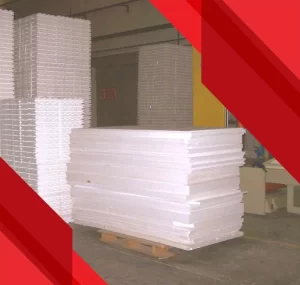
Expanded Polystyrene Sheets are useful where businesses need insulation layers, protective pads, separators, construction applications or cut-to-size packaging. Sheet thickness should not be selected in isolation. A thick, low-density sheet can behave differently from a thinner, denser sheet. Edge quality also matters when sheets are used between finished surfaces. Poor cutting may leave loose beads, uneven contact points or abrasive contamination inside the carton.
Moulded components offer better product location and more controlled cushioning when volumes justify the tooling. They can include ribs, cavities, channels, locking details and dedicated impact zones. Yet a moulded insert is not automatically superior. Badly designed tooling simply produces the same mistake thousands of times.
Cut EPS can be more sensible for changing product ranges, smaller production quantities or businesses that cannot justify mould costs. It also allows faster design changes. The compromise is usually greater labour, less dimensional consistency and more waste from cutting.
Some buyers use the word thermocol for almost any lightweight white foam. That creates confusion when requesting quotations from Thermocol Product suppliers. The intended material, density, dimensions, tolerance and application should be stated clearly. Trade names and informal terms are not technical specifications.
Account for UAE heat, storage and distribution conditions
A packaging sample tested in an office may perform very differently in actual UAE distribution.
EPS does not absorb water in the same way as paper-based cushioning, but water can enter gaps between beads or collect around poorly designed joints. In chilled-food applications, drainage and lid fit can be more important than simply increasing wall thickness. A fish box with strong insulation but no sensible control of meltwater can become difficult to handle, unhygienic and prone to leakage.
Heat exposure deserves similar attention. EPS is an effective insulator, yet it does not create cooling. It only slows heat transfer. A poorly pre-cooled product placed inside an insulated box will remain poorly cooled. Packing warm food with ice packs and expecting the container to correct the temperature is a frequent operational mistake.
The complete thermal system must be considered: product temperature at packing, coolant type, coolant quantity, box wall thickness, internal free space, journey duration, number of openings and external temperature. A box that performs adequately during a short air-conditioned delivery route may fail during customs delays or outdoor loading.
Storage practice can undermine an otherwise correct purchase. EPS components occupy considerable volume compared with their weight. Warehouses sometimes compress bags or stack irregular parts too tightly to save space. Inserts arrive at the packing station distorted, cracked or contaminated. Staff still use them because the damage looks minor.
Fit then changes. A gap of a few millimetres may allow a product to move during vibration. A crushed corner may reduce the intended clearance between the product and the outer carton. Loose EPS pieces stored near dust, oil, solvents or active workshop areas can also pick up contamination.
The material should be kept away from incompatible chemicals and excessive heat sources. Solvent-based adhesives, coatings and cleaning products require particular attention. Compatibility should be checked before production, not after a surface begins to soften or collapse.
Transport conditions within the UAE are rarely uniform. Delivery vans, open loading bays, port handling, courier networks and construction-site storage create different stresses. Packaging chosen for controlled retail distribution may not suit industrial deliveries to remote sites. A few trial shipments through the real route usually reveal more than a polished supplier presentation.
Judge the manufacturer by process control, not samples alone
Good samples can be made for almost any sales meeting. Repeated production is the real test.
When assessing Polystyrene Manufacturers and Suppliers, examine how they control density, dimensions, bead fusion, moisture, cutting accuracy and batch consistency. Ask what happens when raw material characteristics change. Ask how rejected parts are identified. Ask whether the stated tolerance is routinely achieved or merely printed on a quotation.
A moulded component can look correct while having weak fusion between beads. It may break under impact or shed material during handling. Cutting quality can vary between shifts if wires, settings or operator practices are not controlled. Density can also drift, particularly when purchasing is driven aggressively towards lower cost.
The supplier should understand the application rather than simply quote against length, width and thickness.
For protective packaging, provide a product sample or accurate three-dimensional data where possible. Request a prototype. Pack the actual item. Drop it, vibrate it, stack it and inspect the results. Formal laboratory testing may be justified for high-value goods, export shipments, medical equipment or products with expensive warranty exposure. Smaller businesses can still run useful comparative trials, provided the method is consistent and the results are recorded.
Do not approve a design because the product survives one careful drop onto a flat floor. Real handling includes edge drops, corner drops, repeated impacts and vibration. Outer cartons may be damp, over-stacked or closed badly. Pallets may flex. Stretch wrapping can apply pressure that was never considered during design.
Supplier capacity matters as much as technical competence. A converter may produce excellent parts but struggle during seasonal peaks. Ask about normal lead times, emergency lead times, minimum order quantities, storage capacity and continuity arrangements. Imported material or specialised grades may require longer planning.
Tool ownership should be clarified for moulded packaging. Businesses sometimes pay for tooling without documenting where it is stored, who owns it, whether maintenance is included and what happens if the supplier relationship ends. That omission becomes expensive when a product must be moved to another manufacturer.
Compare total operating cost, not price per piece
The cheapest insert may become expensive once damaged goods, packing labour and transport volume are included. Piece price is easy to compare. Total cost is not.
A more accurately moulded component may reduce packing time by several seconds per unit. At low volume, the saving is negligible. At high volume, it may justify a higher material price. A compact design can reduce carton size and improve pallet utilisation. A stronger grade may allow a thinner profile, although this needs testing rather than assumption.
Volume is particularly significant in UAE logistics, where storage and transport space carry real cost. EPS is light but bulky. Poor nesting can fill a vehicle long before its weight limit is reached. Moulded parts should be designed to stack or nest where the product geometry allows it. Cut pieces should be supplied in practical bundles that match the packing line’s daily consumption.
Waste also carries handling cost. Loose offcuts spread quickly through a warehouse. They contaminate work areas, block drains and create housekeeping complaints. A low quotation based on excessive cutting waste may shift the burden from the supplier to the customer.
Recycling claims need scrutiny. EPS is technically recyclable, but practical recovery depends on segregation, cleanliness, collection volume, transport economics and access to a processor. Food residue, adhesives, labels and mixed materials can make recovery difficult. A business generating a steady volume of clean EPS has a better chance of arranging recycling than a small operation producing occasional contaminated pieces.
Some companies replace EPS purely because customers dislike visible foam packaging. That may be commercially reasonable, but alternative materials should be assessed honestly. A heavier paper-based system can increase shipping weight. Moulded pulp may absorb moisture. Honeycomb structures may need more space. Flexible foams can cost more and may present their own recovery problems.
No material deserves automatic approval. The sound decision is the one that protects the product with the least practical use of material, labour and transport capacity while meeting the business’s disposal and customer requirements.
Match the product to the industry and operating risk
Electronics, home appliances and precision equipment usually need controlled cushioning and movement prevention. The packaging must keep the product away from the outer carton and absorb impacts without transferring excessive force. Anti-static requirements may apply to sensitive electronic components; ordinary EPS should not be assumed suitable.
Furniture and glass products often need edge and corner protection. Here, local compression and surface contact become critical. A corner protector that is too rigid can mark a finished surface. One that is too soft may collapse under strapping pressure.
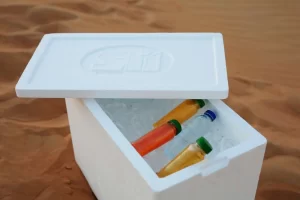
Cold-chain businesses use insulated boxes for seafood, meat, pharmaceuticals, laboratory samples and temperature-sensitive items. Food and medical applications require appropriate material declarations, clean production and careful handling. A statement that the material is “food grade” should be supported by documentation relevant to the intended use. Direct food contact, indirect contact, chilled use and hot-food use are not interchangeable situations.
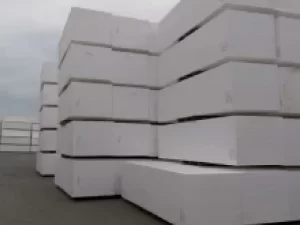
Construction uses include insulation boards, void formers, lightweight fill and architectural shapes. Selection depends on compressive performance, dimensional stability, moisture exposure, fire requirements and compatibility with adjoining materials. EPS should not be specified for a building application from packaging-grade assumptions.
Retail displays, event fabrication and signage use cut or shaped EPS because it is light and easy to form. Surface finishing becomes the difficult part. Paints, adhesives and coatings must be compatible. Unprotected EPS is easily dented, so reusable display pieces may need reinforcement or a harder outer finish.
Agriculture and horticulture use lightweight trays, insulation and protective components. Exposure to sunlight, chemicals, repeated washing or rough outdoor handling may shorten service life. Trials should reflect those conditions.
The right polystyrene products are rarely chosen by industry name alone. Two businesses in the same sector may require different solutions because their routes, packing methods, product values and failure costs are different.
Frequently Asked Questions
How do you choose the right polystyrene products for your business?
Define the failure risk first: impact, vibration, compression, thermal loss, moisture or surface damage. Then specify product weight, dimensions, handling method, journey duration, storage conditions and packing volume. Compare prototypes under realistic conditions before approving regular production.
What are the different types of polystyrene products available?
Common formats include moulded EPS packaging, cut sheets, insulation boards, corner protectors, box liners, fish boxes, thermal containers, void fillers, display shapes and custom protective inserts. Density, thickness, geometry and surface finish can vary within each format.
Why is choosing the right polystyrene product important?
Incorrect selection can lead to product damage, temperature failure, oversized cartons, excessive waste and slow packing. An unsuitable grade may look adequate when new but compress, crack or loosen during actual distribution.
What are the benefits of using the right polystyrene products?
Properly specified material can provide cushioning, insulation, low transport weight, dimensional support and repeatable product positioning. It can also reduce carton size and packing labour when the design is matched closely to the product.
How do polystyrene products improve product protection?
They create separation between the packed item and external impacts. Correctly designed cushioning deforms under load and absorbs part of the energy that would otherwise reach the product. Protection depends on density, thickness, shape, fit and available clearance.
Which industries commonly use polystyrene products?
Typical users include electronics, appliances, furniture, glass, seafood, food distribution, pharmaceuticals, medical equipment, construction, agriculture, signage and retail display businesses.
Are polystyrene products suitable for food packaging?
They can be suitable when manufactured from an appropriate food-contact grade and used within the supplier’s declared conditions. Documentation, cleanliness, temperature, direct-contact requirements and local compliance must be checked. A generic “food-safe” claim is not enough for every application.
Are polystyrene products lightweight and durable?
EPS has a high protection-to-weight ratio and can resist considerable compression when correctly specified. It is still vulnerable to sharp objects, crushing, solvents, excessive heat and repeated rough handling. Durability depends heavily on density and geometry.
What is the difference between EPS and other polystyrene products?
EPS is produced from expanded beads fused into lightweight cellular shapes or blocks. Other polystyrene forms include solid or extruded materials with different surface, strength and insulation characteristics. They should not be treated as direct substitutes without checking the application.
Are polystyrene products recyclable?
Clean EPS can be collected, compacted and reprocessed where suitable facilities exist. Practical recycling depends on volume, contamination, segregation and transport cost. Businesses should confirm an actual collection route before making recyclability claims.