
Fragile products do not usually break because a courier drops a box once. That is the neat explanation. It is rarely the full one. Most breakages happen through a chain of smaller stresses. A carton is squeezed on one corner. A pallet is moved too quickly. A product vibrates for hours in the back of a van between Dubai and Abu Dhabi. A glass bottle shifts two millimetres inside its cavity. A ceramic edge keeps touching the same hard point. By the time the shipment reaches the customer, the crack looks sudden. It was probably building from the first kilometre.
Good polystyrene packaging interrupts that chain. Not by being soft in the casual sense. Soft foam alone is not enough. A fragile product needs controlled resistance. It needs space around it, but not too much space. It needs cushioning, but the cushioning must not collapse under load. It needs separation from other products, from carton walls, from heat, from careless handling, and sometimes from its own sharp edges. That is where well-designed expanded polystyrene packaging earns its place.
The Protection Starts Before the Box Is Closed
There is a common mistake in packaging decisions. The product is designed first, the sales box is designed next, then someone asks for packaging at the end. Usually in a hurry.
That is backwards. Fragile protection starts with the shape, weight, surface finish and weak points of the product. A perfume bottle with a heavy cap behaves differently from a laboratory vial. A framed mirror behaves differently from a medical device with a protruding connector. A ceramic basin may look strong, but one exposed rim can make the whole shipment vulnerable.
Polystyrene works best when it is shaped around the real risks of the item, not just its outer measurements.
The corners matter. The air gap matters. The thickness of the cushion matters. The direction in which the item is likely to fall matters. In UAE distribution, packaging also has to think about warehouse stacking, heat exposure during loading, last-mile handling, and mixed transport conditions. Products may move from a clean warehouse into a hot delivery vehicle, then into an air-conditioned mall, then back outside again. Packaging that looks acceptable in a sample room can behave differently in that cycle.
A good supplier will ask uncomfortable questions. How many units per carton? What is the product weight? Is it packed manually or by machine? Will the cartons be stacked six high? Is the product going into retail, export, e-commerce, cold-chain, or site delivery? Where did previous damage happen?
That last question is underrated. When businesses search for polystyrene packaging suppliers in UAE, price per piece is often the first comparison. It should not be ignored. Nobody has unlimited packaging budget. But a cheaper insert that allows a 3% damage rate is not cheap. It is just moving the cost into replacements, angry calls, credit notes, and lost accounts.
Cushioning Is Not the Same as Padding
People use the word cushioning too casually. A product wrapped in loose padding can still break because padding moves. It compresses where pressure is repeated. It leaves voids. It allows the product to strike the carton wall during vibration. Polystyrene packaging, when properly moulded or cut, gives the product a fixed position.
That fixed position is a large part of the protection. Fragile products hate movement. Not all movement. Some controlled movement is useful because impact energy has to go somewhere. But uncontrolled movement is where breakage starts. The item jumps, turns, knocks, rubs, or loads weight onto the wrong area. Once the product can move inside the carton, the carton is no longer a protective system. It is only a container.
Expanded polystyrene absorbs impact through cell compression. The tiny closed cells deform under sudden force and spread that force over a wider area. The product does not receive the shock as one hard strike. It receives a reduced, distributed load. That is the theory.
In practice, design decides whether the theory works. If the foam is too thin, it bottoms out. The impact goes through it. If the density is wrong, it either crushes too easily or behaves too stiffly. If the cavity is badly measured, the product rattles. If the product has one sharp projection pressing into the foam, that point can become a failure zone. If the carton is weak, the best insert in the world may still lose its geometry during stacking.
Polystyrene does not solve careless packaging design. It rewards careful design.
There is also a difference between protecting against a drop and protecting against vibration. A single drop needs energy absorption. Long-distance transport needs stability, surface protection and resistance to repeated micro-movement. Electronics, glassware, tiles, decorative pieces, lighting parts, and precision components all suffer from this in different ways.
A ceramic item may survive a drop test and still arrive chipped because two surfaces rubbed throughout the journey.
That is why inserts should not merely cradle the item. They should hold it in the right places and leave relief space around vulnerable edges. The strongest-looking part of the product is not always the safest place to support it. Sometimes the right support point is boring, flat, central, and ugly from a packaging-display point of view. Protection is full of these trade-offs.
The UAE Shipping Environment Is Not Gentle
Packaging advice written for mild climates often misses the UAE reality. Warehouses can be well managed, but loading bays are still hot. Delivery routes can be long. Export shipments may pass through multiple handling points. E-commerce parcels may be mixed with heavier products. Retail cartons may be opened and repacked more than once. Construction-related products can sit on sites where dust, heat and rough movement are part of the day.
Polystyrene packaging has advantages in that environment because it is lightweight, rigid enough to hold shape, and resistant to moisture compared with many paper-based void fillers. It does not sag like some soft materials. It does not absorb water in the same way as untreated paperboard. It can be produced as corner blocks, end caps, trays, cut sheets, insulated boxes, separators, edge protectors and custom-moulded forms.
Still, there are limits. High heat will not help any packaging system if the product itself is sensitive. Polystyrene should not be treated as magic insulation for indefinite exposure. It slows temperature change; it does not stop time. For chilled food, pharmaceuticals, seafood, confectionery or laboratory samples, the box design must be matched with coolant type, transit duration, loading temperature, carton closure, and handling route.
A fish box going across town is not the same as a medical sample box going through a longer chain.
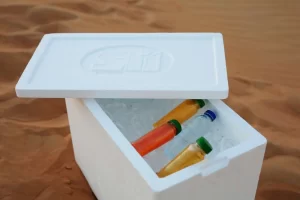
Temperature-sensitive products need packaging that buys time. Polystyrene does that well because trapped air inside the closed-cell structure reduces heat transfer. That is why insulated EPS boxes remain common for chilled and frozen movement. The mistake is assuming the box alone is the solution. It is part of the solution. The cold source, packing discipline, dispatch timing and delivery control are just as relevant.
Some businesses ask whether paper-based alternatives can replace polystyrene completely. Sometimes yes. For certain dry products, short routes, low fragility, and strong carton systems, paper cushioning can work. There are also brand reasons to reduce plastic-based materials where possible.
But fragile, temperature-sensitive, high-value or awkwardly shaped products still expose the weakness of simple alternatives. They either need more material, more carton volume, or higher damage tolerance. None of those is free.
This is where the better polystyrene packaging suppliers in UAE tend to be practical rather than ideological. They look at the product, the route and the damage history. Then they suggest what survives the real journey, not what sounds fashionable in a meeting.
Fit, Density and Shape Decide the Result
The difference between average and excellent polystyrene packaging is not always visible at first glance. Two inserts may look similar. One fails in transport; the other performs for years.
Density is part of it. Higher density can give better compression strength, but too much stiffness may transfer shock instead of absorbing it. Lower density can reduce cost and weight, but it may crush under stacking or repeated handling. The correct density depends on product mass, drop risk, carton size, stacking height and expected transport abuse.
Thickness matters too. Thin foam around a heavy product can be worse than honest cardboard because it gives a false sense of protection. The foam compresses fully, then the product receives the impact. A proper cushion needs enough travel distance to slow the product during impact. That distance is what many rushed packaging designs do not allow.
Cavity design is just as critical. A tight cavity may look secure, but if it grips a fragile part too firmly, stress concentrates there. A loose cavity feels forgiving, but the product may rotate or hit the carton wall. The best designs usually support the product at deliberate load-bearing points and leave space around delicate projections.
Sharp corners need special thought. Glass edges, ceramic rims, appliance corners, marble pieces, lighting fixtures and display items often fail at edges before the main body fails. Corner blocks are not just filler. They are small structural components. Poorly designed corners allow the carton to crush inward. Good corners create a buffer zone and spread pressure into the carton.
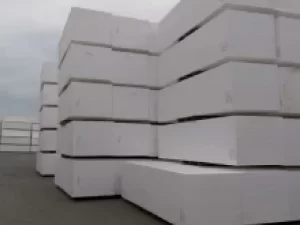
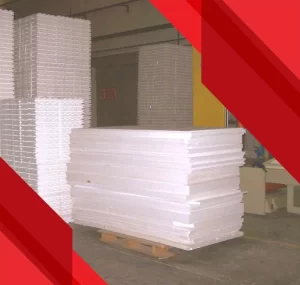
Flat sheets have their place as well. Expanded Polystyrene Sheets are useful for layering, surface separation, insulation, panel protection, construction applications and custom cutting. But sheet material should not be casually substituted for shaped protection when the product needs positional control.
For some products, custom-moulded EPS is the right answer. For others, CNC-cut foam or fabricated blocks are more economical. A business ordering small quantities may not need a mould immediately. A company with repeated production, consistent product dimensions and regular damage risk may save money by investing in a mould. The mould cost often scares people. Repeated damage should scare them more.
Where Polystyrene Performs Best, and Where It Does Not
Polystyrene packaging performs well when a product needs lightweight structural support. Electronics. Glass items. Medical and laboratory supplies. Ceramics. Appliances. Lighting. Decorative products. Cold-chain boxes. Industrial components. Food containers. Export cartons. Furniture parts. Bathroom fittings. Fragile retail packs.
It is especially strong where the packaging must be shaped and repeated consistently. A foam insert made correctly today can be produced the same way next month. That consistency matters in business. Staff pack faster. Products sit correctly. Cartons close properly. Damage reports become easier to analyse because the packaging is not changing every batch.
But polystyrene is not always the correct answer. Very heavy products may need engineered timber, honeycomb board, corrugated structures, EPE, PU foam, rubber supports or hybrid systems. Products with high surface-scratch sensitivity may need liners, films, soft wraps or non-abrasive contact layers. Luxury packaging may need a separate presentation layer because EPS is more protective than elegant. Goods facing strict sustainability requirements may need recovery plans, reuse systems, recycled content discussions or alternative materials.
Food-contact use has to be treated carefully. Polystyrene is widely used for food packaging applications, but suitability depends on grade, intended temperature, local regulations, hygiene, and whether direct contact is involved. A protective industrial EPS block is not automatically a food-contact material. That distinction is not paperwork for the sake of paperwork. It matters.
Fire behaviour also cannot be ignored. Polystyrene should be stored sensibly, away from ignition sources and incompatible conditions. Warehouses should not treat packaging material as harmless clutter. Good housekeeping reduces risk.
The best packaging choice is rarely a slogan. Sometimes the right answer is all-polystyrene. Sometimes it is polystyrene with corrugated board. Sometimes it is an insulated EPS box with gel packs. Sometimes it is foam end caps and a heavy-duty outer carton. Sometimes the product should be redesigned slightly because the packaging is being asked to protect a weak detail that should not have been weak in the first place.
That conversation can be uncomfortable between product teams and packaging teams. It is usually worth having.
Businesses comparing Polystyrene Manufacturers and Suppliers should ask for more than a quotation. Ask about grade options, density, tooling, minimum order quantities, lead time, cutting accuracy, sample development, food-grade availability if required, and whether the supplier can support repeat production without constant variation.
The supplier’s attitude matters too. A supplier who says yes to everything may be easier in the first week and costly in the third month. The better polystyrene packaging suppliers in UAE will say no when a design is too thin, too loose, too weak, or unrealistic for the route. That is a good sign.
FAQ
How Does Polystyrene Packaging Protect Fragile Products During Shipping?
It protects by holding the product in a fixed position, absorbing impact through controlled compression, and spreading pressure away from weak points. The real value is not just “foam around the item”. It is the combination of cavity design, density, thickness, carton strength and support points. A fragile item that cannot shift inside the carton is already far safer than one surrounded by loose filler.
What Are the Benefits of Using Polystyrene Packaging for Businesses?
The main benefit is reduced product damage, but that is only the beginning. Proper polystyrene packaging can speed up packing, reduce carton size, lower shipment weight, protect brand reputation, and make repeat packing more consistent. For businesses shipping fragile goods across the UAE or exporting from the region, consistency can be worth as much as cushioning.
Is Polystyrene Packaging the Best Choice for Product Protection?
Sometimes. Not always. For fragile, lightweight to medium-weight items, shaped EPS can be excellent. For very heavy goods, premium display packaging, or products with strict sustainability targets, other materials or hybrid systems may be better. The product, route, handling conditions and acceptable damage rate decide the answer. A serious supplier will not recommend the same solution for every product.
What Industries Benefit Most from Polystyrene Packaging?
Electronics, food distribution, seafood, pharmaceuticals, ceramics, glassware, lighting, appliances, construction materials, medical devices, laboratory supplies, retail goods and export businesses all use it for different reasons. Some need shock protection. Some need insulation. Some need separation between components. Some need all three.
Why Is Polystyrene Packaging Ideal for Temperature-Sensitive Products?
Expanded polystyrene traps air within its cellular structure, which slows heat transfer. That makes it useful for chilled, frozen and temperature-sensitive goods. It does not replace proper cold-chain control. Coolants, dispatch temperature, box sealing and delivery time still decide whether the product arrives safely.
Is polystyrene packaging suitable for food products?
Yes, when the correct food-suitable grade is used and the application matches the material. Food boxes, trays and insulated containers are common. Direct food contact, hot food, oily products and regulatory requirements should be checked before choosing the grade. Industrial protective EPS should not be assumed suitable for food contact without confirmation.
Is polystyrene packaging recyclable?
Polystyrene can be recycled, but collection and processing are the difficult parts. Clean EPS is easier to recycle than contaminated material. Businesses using regular volumes should speak with suppliers or waste partners about recovery, compaction or reuse options. In practice, recyclability depends less on the material in theory and more on the local collection route.
How does polystyrene packaging reduce shipping damage?
It reduces damage by limiting movement, cushioning impacts, protecting corners, separating surfaces, and maintaining space between the product and the outer carton. The package works as a system. Foam alone cannot compensate for a weak carton, poor taping, bad palletisation or careless packing.
Can polystyrene packaging be reused?
Yes, in some cases. End caps, inserts, insulated boxes and separators can often be reused if they remain clean, dry and undamaged. Reuse works best in closed-loop systems, such as deliveries between the same warehouse, retailer or service centre. It works less reliably when packaging goes to unknown end customers.
What types of products are best suited for polystyrene packaging?
Products that are fragile, shaped awkwardly, sensitive to impact, vulnerable at corners, or affected by temperature changes are well suited. Glass, ceramics, electronics, chilled food, medical supplies, appliances, lighting products, decorative items and precision components are common examples. Polystyrene products are especially useful when the same item is packed repeatedly and the business needs predictable protection.
For companies choosing between basic filler and engineered protection, the difference usually appears after shipping begins. Damaged goods have a way of revealing every shortcut. The better polystyrene packaging suppliers in UAE understand that packaging is not bought for the warehouse shelf. It is bought for the moment a carton is dropped, stacked, squeezed, left in heat, loaded in a hurry, or opened by a customer who expects the product to be perfect.